

Cora Neumann: Immeasurable Impact
March 2020, Montana
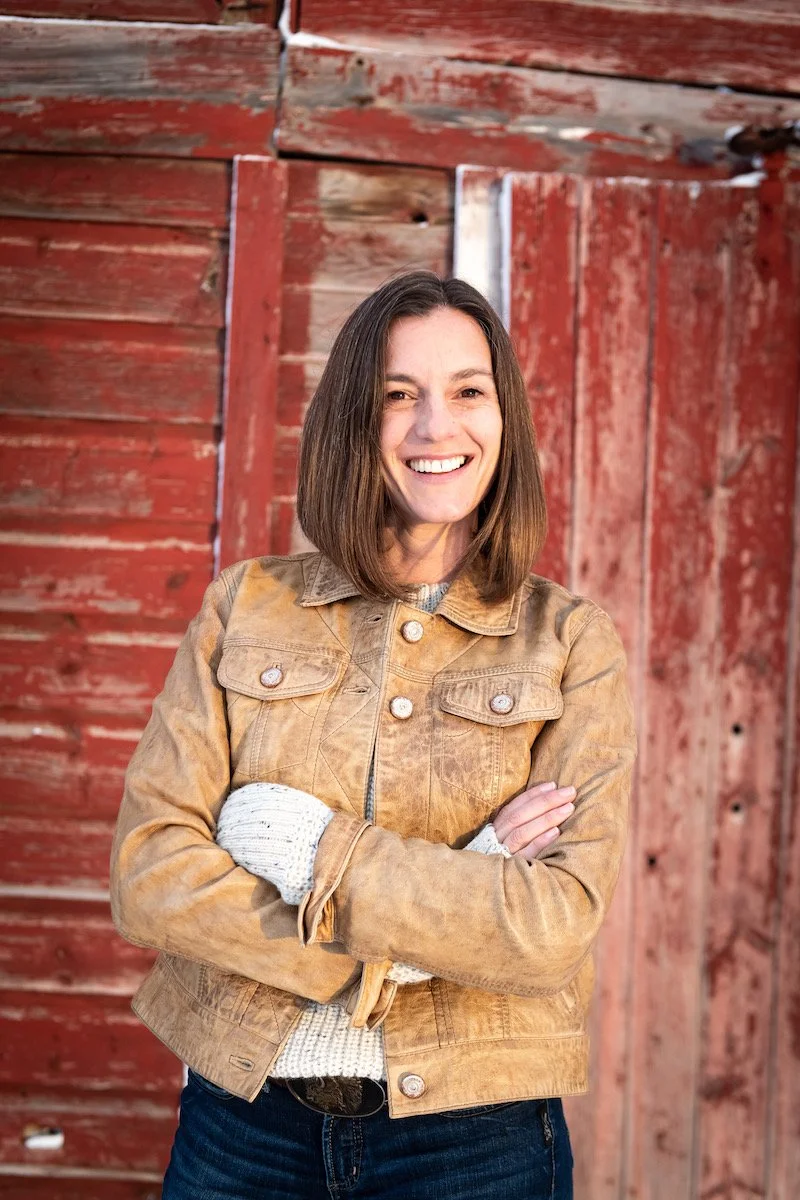
Life moves at an exponential speed for all of us these days. I was prepared to post this essay on Cora Neumann’s Montana Senate run when I happened to see on MSNBC that Montana Governor Steve Bullock was considering running for the United States Senate. On Monday, March 9, 2020, he made his Senate run official. Cora’s campaign sent a note to say she was withdrawing from the race and would be supporting Governor Bullock’s campaign. She bowed out with grace and offered to stay involved in his run against Republican Steve Daines. I find her to be a remarkable person, running for the Senate or not. I want to share with you who she is and why I’m proud to know her.
People look after each other here in Montana. And though it’s not exclusive to the state, it is very much interwoven into this place. It is big, isolated, and, while beautiful, can have dangerous shifts in the weather with no-nonsense temperatures plummeting into the double-digit below zero range. People here take fierce pride in the land and the rivers: What constitutes public and private land access, water rights, mining interests, wildlife protections and the corridors that form their migratory patterns can be affected dramatically by government decisions, often times in conflict with animal rights activists, the same concerns from ranchers and activists about protecting domestic animals from predators, are just some of the volatile issues in this diverse state. People are divided on the value all these things have in their lives. The notion of balance is always in the quotient. It informs our dialogue. It exposes the lack thereof. I believe the land molds who we are. It affects our lifestyle, our decision making process, how we look at others, and is fundamental to what we strive to be.
As divided as our country is right now, Montana is a place, out of necessity, where the weight of our differences are offset by our obligations to each other and what we give importance to. We simply cannot afford to let those differences engulf us. The stakes are enormous in who we choose to represent us in this precious and contentious environment. I had the good fortune to meet someone I feel has the intelligence, the fortitude, and the ability to expand the conversation with regard to the complex issues facing us. Her name is Cora Neumann. I met Cora at the home of some friends of mine last December introducing her and her run for the Senate to the community. It was a small gathering in an informal setting, lending itself to small talk. I knew some of the folks in attendance, and as the evening drew on, was duly impressed by the person the event featured. After hearing Cora speak and answer questions that night, I later spoke to her privately about possibly sharing an extended conversation when and if time allowed. I told her I had written profiles of people and would like to do one on her. At the top of the year she agreed to an interview, which took place by phone February 10th .
I started the conversation with Cora on what I had observed at the gathering in December: her tenacity. I wanted to know where it had come from. I had read in her online bio about the loss of her father from a lumber mill accident when she was a child, but I suspected there was a deeper undercurrent involved. She did indeed credit her tenacity, “with the early loss of my father. He was only twenty-eight when he died,” she said. “Coming into life with one of your first lessons being that things could end at twenty-eight, you can’t waste your opportunity here.” There was in fact more there, much more.
She shared with me something that was not discussed that much in her campaign, that her grandparents on her dad’s side fled the Holocaust. Stark lessons on the fragility of life.
She also lost her brother, Wyatt, to a brain aneurysm a few years ago.
“So it wasn’t just my dad, there’s another layer deeper, which was, ‘You can survive the most unthinkable things and still be faced with yet another tragedy,’ she said. “There’s no such thing as getting life all set up.”
Loss is a big one for her in defining her tenacity. It also defines her as a caring person.
Dealing with injustice reveals another layer of her innate tenacity. Her grandparents survival of the Holocaust weighed on her. “I spent my childhood wondering what I might do if someone like Hitler came to power,” she said. She would lie awake in bed thinking of such things. She had an acute sense of justice and tenuousness of life as a young girl. From the podcast “Work in Progress,” Cora shared a story with host Sophia Bush, “about remembering being on the playground at probably eight years old, hearing kids talk badly about someone else and just going up to them and saying, ‘Hey! You don’t know what that kid has been through.’” She had the sense, even at that young age, “we have to be good and be of service and do what we can and fight for what’s right.” Cora added, “The overarching theme is that there’s no time to waste. We have to do what we can while we’re here.”
Cora has been active throughout her career in organizing people. Following the election in 2016 in which half the country was traumatized, she immediately jumped into the fray. “I started talking to people about their strengths,” she said. She wrote an article entitled, “Who Are You In This Time?” She asked you to consider, “What type of leader you are, what kind of activist you are.” Her mantra and tagline was: “Action is the antidote to apathy,” something she deeply believes in. Cora was influenced by her grandparents having survived the Holocaust and come here to lead a normal life. She asked, “How do you do that? How do you get up every day and do that? I watched my mom do the same after my dad died. How do you get up and keep going when you feel like, truly, for my grandparents, everything was lost?” She goes on to say, “I think it’s action that’s helping others. That is the only way forward in these times.”
In her article she came up with a list of categories defining what kind of activist might look into:
1) Resist- Those who feel protest is the best way to take action.
2) Protect- Find a way to create programs that give protection to those feeling threatened or vulnerable to whatever they are up against: Health Care, Safety, or Education, for example.
3) Build- Find people to build something new. If you’re a creative person, an entrepreneur, if you have the energy to create new things, rebuild.
4) Lead- Inspire others.
“Find out who you are, what fuels you,” she says about the process. “We all have agency, we all have the power to do something.”
I mentioned to Cora the troubling news coming out of the Bears Ears National Monument, that given the current administration there was little hope in anybody intervening to head off the mining and drilling being proposed. She admitted while we might not have the power to stop the many transgressions going on in Bears Ears, that there were other proactive considerations, such as finding a piece of land in your area that needs protection or is at risk. Also, to get involved in the education of your children at the school in your community about the importance of public lands. She told me, “You shouldn’t turn away from that active fight against what’s happening at Bears Ears.” She went on to say, “I’ve been working with communities at the center of that for the last four years. They’re very, very heartbroken right now and afraid.” I could feel the passion in her voice as she said, “It’s real, but they’re not going to stop. And one thing I’ve learned from working with native communities is incredible patience, a deep and long and abiding sense of patience, that this is a long game.”
Cora Neumann’s education is tailored for working with disparate groups. She has a master’s degree in global public health from Columbia University, and a doctorate in international development from the University of Oxford. Her master’s and doctorate were centered on working with indigenous, white, rural, native, and health leaders in those communities. She later worked at the State Department in the economic bureau and as a senior adviser.
With regard to her education, she emphasized to me, “It is important to acknowledge you don’t need that [higher education] in order to be a successful person.” She said, “My mom and stepdad didn’t graduate high school, although my mom got her GED and went on to study nursing, they’ve had successful lives, and they are some of the smartest people I’ve ever met.” Both her parents and her grandparents made an indelible impression on Cora to the ideals of “hard work, focus, making sure that you’re challenging yourself, pushing yourself,” she says it, “motivated me to go on and get as much education as I could.” She considers her education a privilege. “I had to work up to four jobs. I worked the entire time I was in school . . . it was definitely not easy.” And although she had scholarships, it didn’t cover the full costs—she is still paying off her college debt. I was moved by what she had to say next, “I’ve been at the table with leaders at the highest level, and the smartest people are not always at the table. I think we have to really look carefully through our communities to find the people that are the most creative and have answers to what we are looking for and know their communities.” That said, what resonated with me was the notion you still have to have someone in power willing to listen to those at the ground level. It is not always the case.
There was a turning point in her life that exemplified her abilities with forming coalitions, trust, and with clear thinking, realizing far reaching goals affecting millions of people around the world. In 2008, at age thirty-three, Cora helped organize a health summit in Los Angeles, California, inviting the largest gathering of African First Ladies outside the continent ever to take place. In 2009, she created the African First Ladies Initiative (now known as Global First Ladies Alliance or GLFA). Someone that understood the importance and potential impact of Cora’s vision was first lady, Laura Bush. She was the first to get onboard with GFLA.
Over the past 10 years, GFLA has worked with more than 40 First Ladies, including US First Ladies Michelle Obama, Lauda Bush, Hillary Clinton and Rosalynn Carter, as well as first ladies from across Africa, Europe and Asia.
Cora shared a success story on the power of First Ladies from an example of her work with the First Lady of Sierra Leone, Sia Nyama Koroma.
“They were having very serious maternal mortality rates, which is mothers dying in childbirth. There was a national policy along with multiple international organizations that were trying to lower these rates and get mothers to the hospital and make sure they had safe delivery. And nothing was making a large enough impact.” She explained that on the national level, they were too far removed from the people, while the international organizations were comprised of outside groups not understanding what was happening on the ground. A lack of communication created stalemate and confusion. “First Lady Koroma, who had a background in nursing, sat down with these local community leaders and asked them what to do. She recognized that the indigenous leaders and the tribal chiefs and the religious leaders needed to be part of the conversation. Nobody had really asked them yet.” Cora pointed out, “So you pass a Federal law, but if you don’t make sure that it resonates with or is something that can be implemented at the local level, it’s not going to go anywhere. And I think we see that in countries across the world including the U.S.”
The result of widening the conversation with a host of local leaders to find solutions, “instead of doing something ‘top down,’ was that mortality rates plummeted within two years.” Local codes were passed supporting the Federal mandate to get women to the hospital. “That type of inclusive leadership and long term vision that women tend to bring to the table, helped ensure that their children and their grandchildren are protected. They’re really thinking about long term survival for their families.” She says, “We need more people with that viewpoint in elected office.” The story shows the immeasurable impact of lifechanging actions along with heartfelt decision-making.
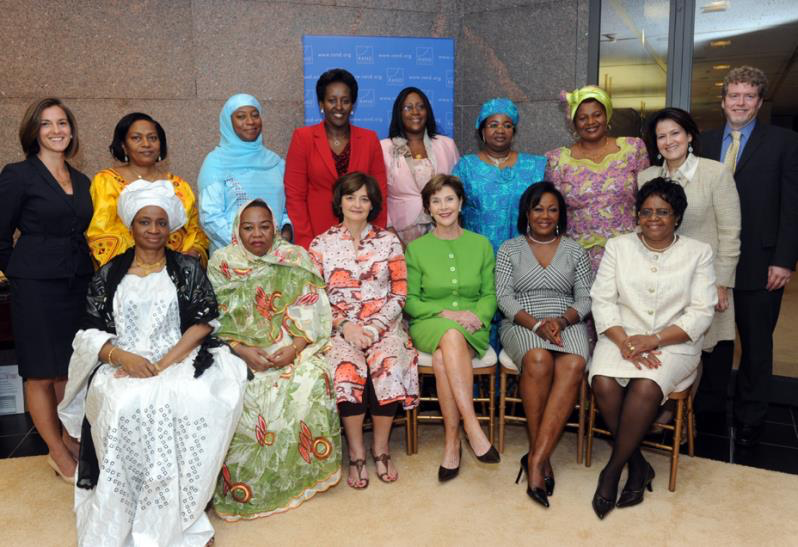
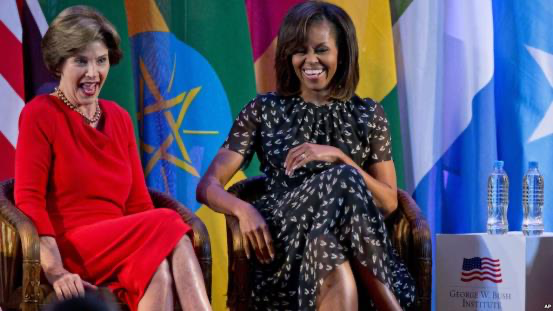
The following is an excerpt of an article Cora wrote for the HUFFPOST 2017:
And so it went, until late April 2009, when we convened 13 African first ladies, Sarah Brown, Laura Bush (via videoconference), and nearly 300 of the world’s leading global health, education and development experts in Los Angeles for the African First Ladies Health Summit.
A high point of the summit was a closed first ladies’ roundtable moderated by Anita McBride and Melanne Verveer,. . . The roundtable, focused on how the powerful position of first lady actually came with no job description or standard infrastructure, was lively and transformative for a number of first ladies.
Through this dialogue it became clear that with strategic support, training and technical assistance, Africa’s first ladies would be able to act as even more visible champions and leaders in improving the health, education and welfare of men, women and children in their countries and continent-wide.
Based on this feedback, Anita McBride, former Chief of Staff to Laura Bush, and I co-founded the African First Ladies Initiative at the RAND Corporation.
Since its inception, AFLI has worked closely with individual first ladies to refine and grow their platforms, fostered collaborations between first ladies with more than thirty public and private entities, convened annual First Ladies Roundtables, hosted several international meetings of first ladies, and launched its signature program, the African First Ladies Fellowship Program. To date, AFLI has worked with 24 first ladies and 36 of their senior advisors across Africa.
Five years ago, I could have only dreamed that we would bring Laura Bush and Michelle Obama together on an international stage to discuss their experiences as first ladies with their counterparts.
I had to ask Cora a fundamental question: How did she get past the gatekeepers? “I called the embassies, I set out the vision that this [summit in Los Angeles] was going to happen. I started inviting first ladies and talking to them about it and why we were doing it, why it mattered. Their offices would call back and ask in an incredulous manner, ‘Just to be clear, you want the first lady to speak?’ They’d never been asked before.” What guided Cora was the notion that “If you have a strong vision that’s truly led from the heart and from a place of believing in people, and it’s being implemented for the right reasons to support and empower them, then you just keep at it and at some point you break through.” Cora never gave up. If one office didn’t respond, she called another one. Her tenacity was on full display. Above all, she believed that these women deserved to be heard, to be treated with respect. And though there was no legal mandate involved, the intention was enacting change through building a platform of both inspired action and leading without authority.
In Cora’s run for the U.S. Senate here in Montana, “I like to say that Montanans are practical not political, for the most part. At the edges we have those with very strong, specific political affiliations and views, but most Montanans are pretty practical. . . . that growing up in Montana, politics was not something people talked a lot about. You judge people on their character . . . on the work they’ve done, who they are, their actions not their words. That’s the true nature of Montana.”
Cora’s goal had been to represent Montana in the Senate. She told people on the trail when asked her party affiliation, “Yes, I’m a Democrat, but I’m very independent and I’m Montanan.” Her parents were Democrats and her grandparents were strong Republicans.
She pointed out to me that Montana is a purple state. Jon Tester is Montana’s senior Democratic Senator, while Steve Bullock, also a Democrat, is Governor, who she now supports.
I pressed her about what had happened when she met someone who didn’t like that she was a Democrat, “I’ve had people who wouldn’t shake my hand at first . . . they pull back, but then we have a great conversation and they’re really interested and intrigued.” Cora got positive feedback because people wanted someone who cared about them. She said, “Steve Daines,” the junior Republican Senator who Steve Bullock will be running against, “does not care about them. They have no evidence to show that he does. He doesn’t ever talk with anybody, never meets with anybody in person. He’s passed multiple bills that are not good for Montana.” She said pointedly, “The only good legislation he’s passed is Tester’s legislation that he then put his name on.” She reasons, “We want strong leaders. We want people who are independently minded, who make up their own minds, who don’t just follow the leader and who engage with us, care about us, let us know that they care about our families and our kids’ future. And he’s not doing any of that.” She said, “I don’t think party matters as much as why you’re motivated to serve.”
Cora has built a strong moral core of beliefs over the years in a thoughtful progression tied to a solid sense of who she is and where she’s from: “Montana values are about taking care of each other, taking care of the land we live on, putting differences aside to get things done.
That’s part of why I’ve been successful in the world, because I’m Montanan.”
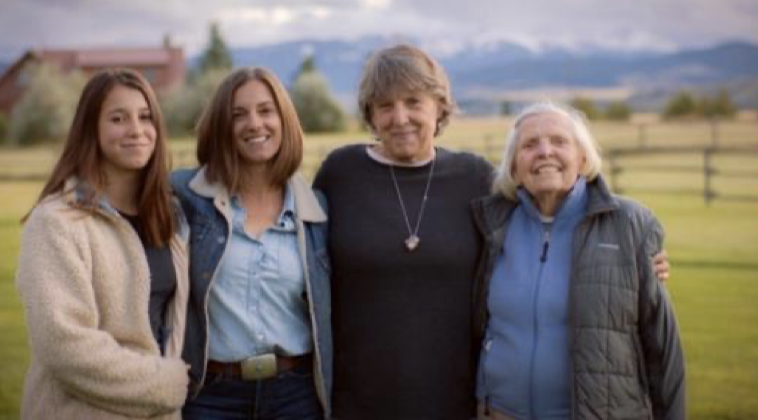
We are forged in life, all of us, by the crucibles we face. Our strengths and weaknesses are registered in how we absorb and come to understand the measure and meaning they hold. For some, what is not only learned but tested from these experiences, whether uplifting or weighted in an undertow of misery with unanswerable questions, is a path focused on service to others. Where our sense of empathy is tempered, sustained and emboldened by turning critically wounding episodes into vehicles of compassion and grace, sharing something bigger than ourselves, giving voice to the silent among us. Cora Neumann embodies those life’s lessons. She will remain in the fight for the values she holds dear, for her family and ours. We are fortunate to have her voice, which I fully expect to resonate for a very long time.
Bill Payne
My thanks as always to my friend and editor, Gary Bays, for keeping me between the lines. Also, much love and thanks to my wife Polly for her helpful insights.